 Reviews



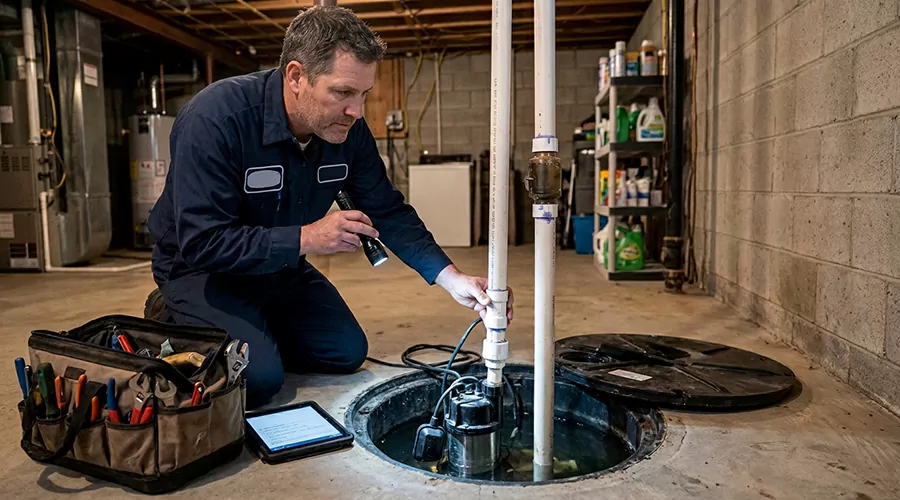
A sump pump keeps cycling on and off when water repeatedly triggers its float switch, often because the check valve allows discharged water to flow back into the pit. An incorrectly adjusted float, undersized sump basin, or high groundwater inflow can also cause short cycling. Frequent starts put extra wear on the motor and may shorten the pump's service life. Regular sump pump maintenance can help identify faulty check valves, float switch issues, and drainage problems before repeated cycling leads to premature pump failure.
A properly operating sump pump starts when water rises to its activation level and shuts off after removing enough water. The exact cycle length depends on the basin size and water entering it. The most useful clue is what happens to the water level immediately after the motor stops.
What Causes a Sump Pump to Short Cycle?
Short cycling means the pump turns on and off more frequently than its normal operating pattern. The cause may be mechanical, related to the installation, or simply the amount of groundwater arriving at the basin.
Faulty or Missing Check Valve
A check valve allows water to travel toward the discharge outlet while preventing reverse flow. When the valve is missing or fails to close, water above it may return to the sump basin after each cycle.
The rising level activates the float again, causing the pump to remove some of the same water repeatedly. You may hear water rushing backward into the pit immediately after the motor stops.
A small amount of water returning from piping below a correctly positioned check valve may be normal. The problem occurs when enough water returns to repeatedly restart the pump.
Incorrect Float Switch Adjustment
The float switch determines when the motor turns on and off. If its operating range is too narrow, a small change in water level may activate another cycle.
A tethered float can also catch on a power cord or pit wall. Vertical float assemblies may have adjustable stops, depending on the model.
A switch that sticks or has worn electrical contacts can produce erratic operation. Adjustments must follow the manufacturer's instructions.
Sump Basin Is Too Small
A small basin holds relatively little water between the pump's starting and stopping levels. Even moderate groundwater inflow can fill it quickly.
The pump may empty the basin in a few seconds and restart soon afterward. Replacing the motor with a larger model won't necessarily solve a basin-size problem.
Pump Is Oversized
A pump with substantially more capacity than the drainage system needs can empty a small pit very quickly. This creates brief pumping cycles and frequent motor starts.
Correct sizing depends on groundwater inflow and total discharge head, not just horsepower. A specialist can determine whether the pump and basin are appropriately matched.
Excessive Groundwater Entering the Pit
Heavy rainfall and snowmelt can cause water to enter the basin almost continuously. Short intervals between pumping cycles may then reflect actual drainage demand rather than a failed component.
However, the pump must still discharge water effectively. Repeated cycling alongside rising basement water suggests the system cannot keep up.
Discharge Water Returning Toward the Foundation
An outlet that releases water too close to the home may allow it to infiltrate the soil and reenter the foundation drainage system.
This creates a repeating pattern in which the pump removes groundwater that eventually returns to the same basin. Correcting the discharge location can reduce unnecessary operation.
How Can You Tell Why Your Sump Pump Keeps Starting?
Observe the water level from a dry, safe place for two or three complete cycles. Do not touch the pump or electrical connections while they are operating.
| What happens | Possible cause | Recommended check |
|---|---|---|
| Water rushes back after shutdown | Failed check valve | Inspect discharge backflow |
| Float barely moves between cycles | Narrow switch range | Review float setting |
| Pit empties within seconds | Small basin or oversized pump | Assess system sizing |
| Water rises rapidly during storms | High groundwater inflow | Check incoming drainage |
| Pump starts even with low water | Stuck or defective switch | Inspect float operation |
| Pumped water collects near foundation | Discharge recirculation | Check outdoor outlet |
The timing matters. Backflow often causes an almost immediate restart, while genuine groundwater inflow produces a more gradual rise.
How to Check a Short-Cycling Sump Pump?
A simple observation can help identify whether the water is returning through the discharge pipe or entering from the foundation drainage system. Professional commercial plumbing can also help inspect drainage connections, discharge lines, and related plumbing components to identify flow problems and recommend appropriate repairs.
Step-by-Step Inspection
- Stand on a dry surface with a clear view of the sump basin.
- Note the water level when the pump starts.
- Observe how far the level falls before shutdown.
- Watch whether water suddenly rushes back into the pit.
- Check whether the float moves freely without touching it.
- Look outside for the location of discharged water.
- Record the number of starts during a 10-minute observation.
- Note whether the pattern changes during rainfall.
Do not disconnect a pump during an active storm simply to examine it. If the basin continues filling, a working backup pump or professional assistance may be necessary to prevent flooding.
How Do You Fix a Sump Pump That Keeps Cycling?
Replace a Defective Check Valve
A plumber can determine whether the check valve is stuck open, installed incorrectly, or worn out. Replacing a failed valve stops excessive discharge-line backflow.
The new valve must match the pipe diameter and required flow direction. Its installation should also permit future inspection according to the system design.
Correct the Float Switch
If the float catches on debris, correcting the obstruction may restore proper cycling. A damaged switch may require replacement.
Some pumps allow adjustment of the start and stop levels. Never increase the operating range beyond the manufacturer's permitted settings or allow the pump to run dry.
Assess Basin and Pump Sizing
A persistently short cycle caused by a small basin may require changing the system design. A larger sump basin can increase the amount of water handled between starts.
An oversized pump may also warrant replacement with a correctly sized model. These changes should consider expected groundwater flow and the discharge piping.
Move the Discharge Away From the Foundation
The outlet should direct water to a permitted drainage location where it won't immediately return toward the basement.
Avoid directing water onto neighboring properties or connecting sump discharge to a sanitary sewer where local rules prohibit it.
Can Frequent Cycling Damage a Sump Pump?
Yes. Every motor start creates electrical and mechanical stress. Repeated rapid starts can contribute to overheating and premature switch or motor failure.
Short cycling can also create repeated changes in discharge pressure. Check valve failures and loose pipe supports may make the operation unusually noisy.
If a breaker repeatedly trips or the pump becomes excessively hot, stop unsafe operation and arrange professional assessment.
How Much Does Sump Pump Short-Cycling Repair Cost in 2026?
The following are approximate U.S. costs for common repairs.
| Service | Estimated cost |
|---|---|
| Replacement check valve, part only | 10–30 |
| Replacement float switch, part only | 20–40 |
| Professional float switch replacement | 140–400 |
| Professional check valve replacement | 120–350 |
| General sump pump repair | 200–870 |
| Existing pump replacement, installed | 309–755 |
Replacing a sump basin or changing drainage routes is a larger project and requires a separate estimate.
When Should You Call a Professional?
Call a plumber or sump pump specialist when the pump restarts every few seconds or a new check valve doesn't resolve the problem. A professional can assess switch behavior, pump capacity, and incoming drainage conditions.
If water is entering the basement, prioritize flood protection rather than repeatedly testing the pump.
How Can You Prevent Short Cycling?
Routine checks help reveal backflow and switch problems before the wet season.
- Monthly: Observe a complete pumping cycle.
- After heavy rainfall: Check for water returning to the pit.
- Every three months: Test automatic operation according to the manual.
- Annually: Have the check valve and float mechanism inspected.
- Before freezing weather: Check the discharge route for restrictions.
Common Questions About Sump Pump Short Cycling
Why does my sump pump turn on every few minutes?
Groundwater may be entering rapidly, or water may be flowing back through a defective check valve. Watch the pit level after shutdown.
Is it normal for a sump pump to run every 30 seconds?
It can happen during unusually heavy inflow, but repeated short cycles deserve inspection, especially when little new groundwater is entering.
Can an oversized sump pump cause short cycling?
Yes. A high-capacity pump can empty a small basin very quickly and restart frequently.
Will replacing the float switch fix short cycling?
It can help when the switch is sticking or incorrectly controlling the water levels. A failed check valve requires a different repair.
Can a bad check valve damage the pump?
Yes. Repeatedly pumping returned water increases motor starts and may contribute to premature wear.